

 Paris 1900
 Paris 1900
 Paris 1900Paris 1900Paris 1900Paris 1900
 Paris 1900Paris 1900Paris 1900Paris 1900Paris 1900
 London 1908London 1908London 1908London 1908London 1908London 1908London 1908London 1908London 1908London 1908London 1908London 1908London 1908London 1908London 1908London 1908
Scotland's first Olympic event
Although the 12-metre class went on to be the boat of choice for the America's Cup from the 1950s - 1980s, it only ever appeared at three Olympics.
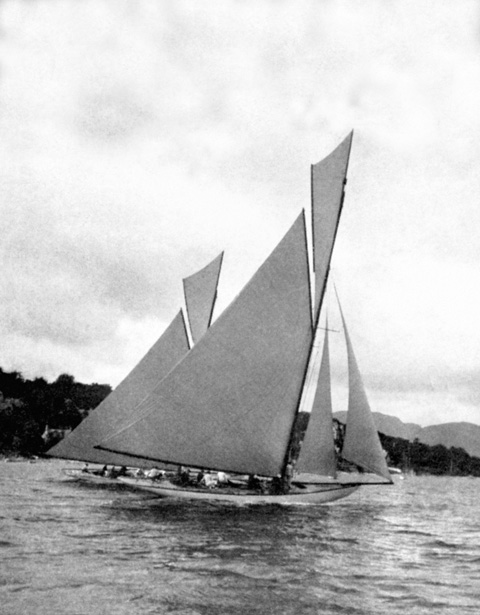
In its first appearance at the 1908 Olympics in London, the 12-metre class didn't even garner any foreign entries and was contested solely between two British teams. That's not to say that there wasn't a heated competition between athletes from different nationalities as sporting rivals England and Scotland competed for gold.
The crew of Englishman Charles MacIver's Mouchette - including MacIver's son - were all from Merseyside and Scotsman Thomas Glen-Coats Hera (designed by Glen-Coats himself) was crewed by fellow Scots from the Royal Clyde Yacht Club.
The home waters flowed in favour of local boat Hera as Glen-Coats' team won the first two races of the three-race series. The third race was not contested following this early lead and Glen-Coats and the Hera crew were awarded the gold.
Racing on the cool waters of the River Clyde, rather than Cowes where the other sailing events took place, meant Scotland hosted its first Olympic event, something it wouldn't do again until the services of Hampden Park in Glasgow were called upon to support with the football event in London 2012.
 London 1908London 1908London 1908London 1908London 1908London 1908London 1908London 1908London 1908London 1908London 1908London 1908London 1908London 1908London 1908London 1908London 1908London 1908
Husband and wife crew take a harmonious gold
Following in the family footsteps, sailor Charles Rivett-Carnac built a career working for the Indian Civil Service before moving on to positions in Myanmar (then Burma) and Thailand (then Siam). But Rivett-Carnac wasn't only interested in his work, he wanted to sail and he wanted to compete.
In the 1908 London Olympics, Rivett-Carnac helmed the only entry in the 7-metre class with his boat Heroine III. As the only entry, gold belonged to the crew of Heroine III after completing just one lap of two races.
Despite their lack of competition, Heroine III still managed to set a few records. On the crew was Rivett-Carnac's wife, Frances. As they crossed the line after the single lap of the second race, the Rivett-Carnacs became the first husband and wife team in the history of the Olympics to win a shared gold. Frances also became the first British female to win sailing gold. Charles set another record too, at 55, he remains the oldest gold medal winner in British Sailing history.
The Rivett-Carnac family continued to tread the globe and compete in sports outside of sailing. The sailing couple's granddaughter, Cleone Rivett-Carnac won bronze in javelin for New Zealand in the 1950 British Empire Games (now known as the Commonwealth Games).
London 1908London 1908London 1908London 1908London 1908London 1908London 1908  Antwerp 1920Antwerp 1920Antwerp 1920Antwerp 1920Antwerp 1920Antwerp 1920Paris 1924
 Amsterdam 1928Paris 1924Paris 1924Amsterdam 1928Paris 1924Paris 1924Amsterdam 1928Amsterdam 1928Amsterdam 1928Amsterdam 1928Amsterdam 1928Amsterdam 1928
 Los Angeles 1932Los Angeles 1932Los Angeles 1932
 Berlin 1936Berlin 1936Berlin 1936Berlin 1936Berlin 1936Berlin 1936Berlin 1936Berlin 1936Berlin 1936Berlin 1936Berlin 1936
 Helsinki 1952Berlin 1936
Sailor, artist and champion of nature
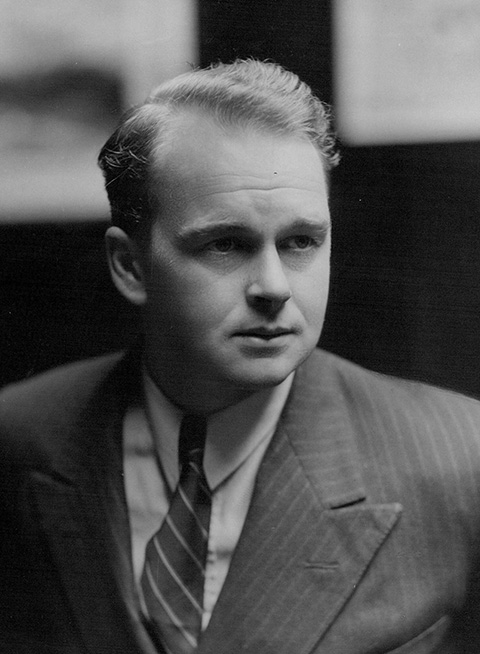
Sir Peter Scott took bronze in the One Person Dinghy at the 1936 Berlin Olympics, but he is remembered for so much more than his Olympic achievement.
The son of renowned explorer Robert Falcon Scott, known to many as 'Scott of the Antarctic', Peter Markham Scott dedicated his life to nature. Sadly, Robert Scott died in his attempt become the first man to reach the South Pole in March 1912 when his son was not quite three. Before this fateful expedition, he had made a very specific wish to his wife, sculptor Kathleen Scott: He wanted his son to study natural history.
This wish became a reality. While an undergraduate at Trinity College, Cambridge, Peter Scott became fascinated with wildfowl and wildfowling. He had a great talent for painting geese and ducks and wrote several books about wildfowl in the 1930s. He set his paints and pens aside during World War Two when he served as Lieutenant-Commander with the Royal Naval Volunteer Reserve.
Scott went on to set up the Severn Wildfowl Trust (now the Wildfowl and Wetlands Trust - WWT) in 1945, starting by showcasing his personal wildfowl collection. He joined the Council of the International Union for Conservation of Nature and Natural Reserves in 1960 and, as part of this work, helped found the World Wildlife Fund (WWF) to protect endangered species. He served as Chairman of the WWF until 1982, putting his artistic skills to use to design the famous panda logo that's still recognised around the world today.
Some may remember Sir Peter Scott as the presenter of wildlife programme Look. This pioneering show, the first nature programme on the BBC, inspired children and adults alike, including Sir David Attenborough.
Even when busy with his conservation work, Scott found time to get out on the water. He served as President of the International Yachting Union (now World Sailing) from 1955 - 1969 and won the International 14-foot Championship for the Prince of Wales Cup three times.
Scott was knighted in 1973.
 Berlin 1936Helsinki 1952Berlin 1936London 1948London 1948London 1948London 1948London 1948London 1948London 1948London 1948London 1948London 1948London 1948London 1948London 1948Helsinki 1952
 Melbourne 1956Helsinki 1952Helsinki 1952Melbourne 1956Helsinki 19521952 HelsinkiMelbourne 1956Helsinki 1952Helsinki 1952Helsinki 1952Melbourne 1956Helsinki 1952Melbourne 1956Helsinki 1952Helsinki 1952Helsinki 1952Melbourne 1956Melbourne 1956Melbourne 1956Melbourne 1956Melbourne 1956
 Rome 1960
A lifelong love for sailing
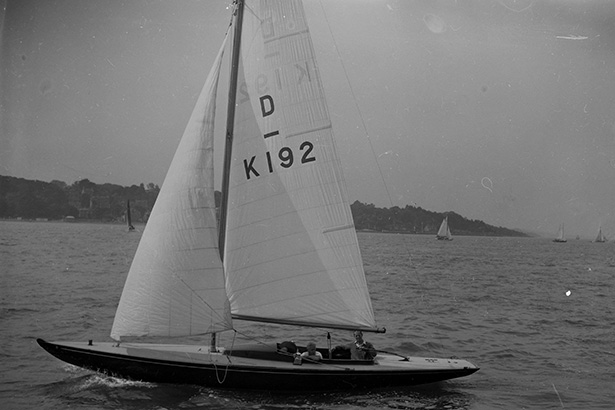
An adventurous sportsman, Jonathan Janson competed for over five decades, raising the sails in two Olympics and multiple World Championships.
Janson entered his first major international competition in 1956 when he and fellow enthusiastic amateurs Graham Mann and Ronald Backus paid their own way to the Melbourne Olympics. Their belief in themselves paid off when they took bronze in the Dragon class aboard Bluebottle. Perhaps they had a little extra royal luck willing them along towards this special medal - Bluebottle had been a wedding present from the people of Cowes to the Queen and Duke of Edinburgh in 1947.
They couldn't quite recreate this success at the following Olympics in Rome, finishing seventh in Salamander, but this didn't buck Janson's love of competition.
After the Rome Games, Janson continued his Olympic career landside, serving as a member of the International Jury at four Olympic Regattas. He was awarded the Silver Olympic Order in 1990.
Outside of his efforts at the Games, Janson was an outstanding competitor in the Redwing Class with his father Rex, and they regularly competed at Cowes. He competed in four World 5.5 Metre Championships, finishing fifth at Miami in 1997 when he was 67. In 2001, at the age of 70, Janson competed in his final World 5.5. Metre Championship. With decades of experience and the fitness borne of so many years competing, Janson finished fifth in Salamander V.
A Life Member and former Commodore of the Bembridge Sailing Club on the Isle of Wight, Janson was a familiar face to many sailors. He served on the committee of the International Yacht Racing Union (IYRU) for over 30 years and was Chairman from 1979 to 1990. He joined the impressive list of winners of the ISAF Croce Trophy in 1995 for his outstanding voluntary contribution to the sport.
In 2005, he was made an Honorary Lifetime Member of the RYA in recognition of his contribution to the financial wellbeing of the organisation.
 Melbourne 1956Rome 1960 Melbourne 1956Rome 1960
 Tokyo 1964
 Mexico City 1968Rome 1960Rome 1960Munich 1972Rome 1960Rome 1960Rome 1960Rome 1960Mexico City 1968Rome 1960Rome 1960Tokyo 1964Tokyo 1964Tokyo 1964Mexico City 1968Tokyo 1964Tokyo 1964
A name close to many sailors' hearts
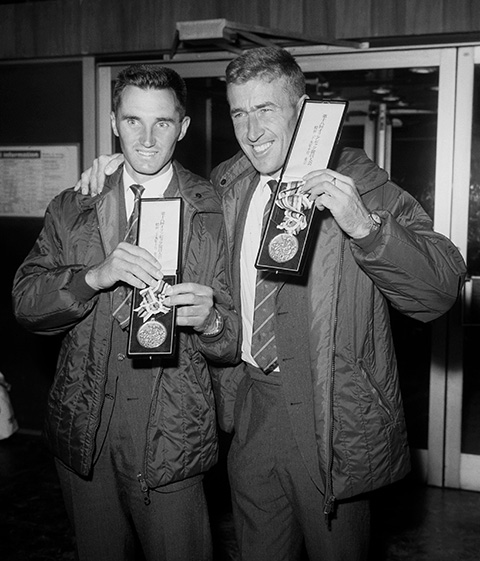
Franklyn Keith Musto competed at the Tokyo 1964 Olympic Games. He and his crew, Tony Morgan, were told they were too short and too light for the heavyweight class but they didn't let that stop them.
Reinvigorated by the need to show their critics what they could do, the pair trained every day knowing fitness could give them an advantage. They were some of the first sailors to prepare like the athletes of today, committing to the process and pushing their abilities further. Their dedication drove them to silver in the Flying Dutchman class on the waters of Enoshima, only just missing out on gold. Their efforts and resistance to the naysayers secured them Britain's only medal in sailing at the 1964 Olympics.
Does Musto's name ring a bell? That's no surprise - thousands of sailors head out onto the water with Musto's name splashed across their chest thanks to Keith Musto's technical sailing clothing innovations.
As a sailor himself, Musto knew how poor the clothing worn by sailors of his day was. Musto saw that his fellow sailors accepted getting soaked through as part of the sport but he looked at it differently - here was a problem to be solved. Relying on the technical engineering training he gained working on sails and masts, Musto shifted his 'Musto & Hyde' brand from sailmaking to performance sports clothing.
Musto is now the world's number one performance sailing brand. Thanks to the work Keith Musto started, survival times in the world's coldest waters have improved from minutes to hours in Musto drysuits and the three layer system has become standard in many outdoor pursuits.
Keith Musto didn't add to his Olympic medal tally after Tokyo 1964, but he was reserve in the Flying Dutchman class for the 1972 Summer Olympics in Munich. He also won medals at the 1963 and 1969 World Championships and was awarded an OBE in 2014 for services to the economy.
 Tokyo 1964Tokyo 1964 Tokyo 1964Mexico City 1968Mexico City 1968Munich 1972 Mexico City 1968Mexico City 1968
 Montreal 1976Mexico City 1968Mexico City 1968Munich 1972Montreal 1976
The most successful British yachtsman of the twentieth century
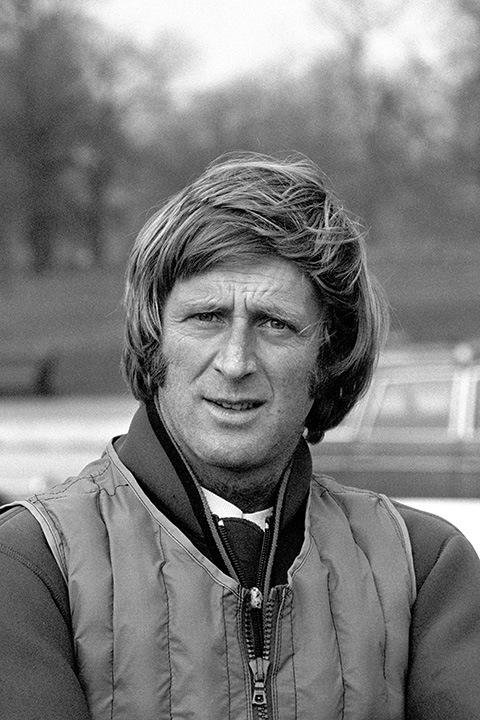
A member of Itchenor Sailing Club, Rodney Pattison held the title of Britain's most successful Olympic yachtsman for many years. He competed at three different Olympic Games, sailing with a different crew each time, and always came home with a medal round his neck.
Pattison's first major success came in 1960 when, as a 17-year-old, he won the world cadet title with his brother John crewing. In 1968 he won the world and European titles before going on to win an Olympic gold medal with Iain MacDonald-Smith in the Two-Person Heavyweight Dinghy at the Games in Mexico City. Chasing victory, Pattison and McDonald-Smith travelled to Mexico two months before the Games began to acclimatise and familiarise themselves with the local sailing conditions.
After bringing his gold medal home, Pattison resigned from the Royal Navy and joined a boat building firm in Dorset to give himself more time to train and compete. In the build-up to his second Olympic appearance, Pattison made an international name for himself as the leading helmsman in the Flying Dutchman class. He wowed the sailing world as he won every World and European Championships from 1968 to 1972.
To maintain his status as champion in this class, Pattison paid particular attention to his fitness regime. He knew this could set him apart. His tenacity was rewarded when he won his second Olympic gold in 1972 alongside crewmate Christopher Davies with a brilliant performance in Munich.
A British Olympic star, Pattison was awarded the honour of acting as Team GB’s flag-bearer at the 1976 Montreal Olympics. Gold was out of reach this time as the German team sailed to victory, but Pattison and Julian Brooke-Houghton still came away with a very respectable silver medal each.
A versatile sailor, Pattison left behind his favoured class in 1983 when he co-skippered Victory 83, Peter de Savary's entry for the America's Cup. Pattison's Olympic efforts and promotion of the joys of sailing were recognised when he was awarded the MBE in 1969.
 Mexico City 1968Munich 1972Mexico City 1968Munich 1972Munich 1972Munich 1972Montreal 1976Munich 1972Montreal 1976Munich 1972Munich 1972Munich 1972Munich 1972Montreal 1976Munich 1972Montreal 1976Montreal 1976Montreal 1976Montreal 1976Montreal 1976
 Barcelona 1992Montreal 1976Montreal 1976
Russia's controversial Olympic legacy
The 1980 Olympics held in Moscow were some of the most controversial in the history of the Games. Host nation, the Soviet Union, invaded Afghanistan at the end of 1979 which led to widespread calls to boycott the event.
Despite political pressure, the British Olympic Association decided it would send a team and asked the individual National Governing Bodies of each Olympic sport to decide whether to participate. With the Olympics due to begin on 19 July, the NGBs had until 24 May - the International Olympic Committee’s entry deadline - to make their choice.
There was much debate across the British sporting community about whether to attend. As with any other Olympics, athletes had trained for years for the chance to compete on one of the world's greatest sporting stages up against the best of the best.
On the 14 April 1980, the RYA Council debated the matter and voted not to send a team ‘unless there is a dramatic change in circumstances’. The scheduled Olympic trials regatta went ahead as planned in Weymouth in May in the hope that some individual sailors would be selected to compete by the BOA. In the end, Great Britain had no representatives in the sailing events at the 1980 Games.
The RYA recognises that this decision had a profound impact on sailors, coaches and their families at a time when athlete voice and mental wellbeing were not given the attention they receive today. We pay tribute to the dedication and achievements of the sailors listed in this Olympic and Paralympic roll of honour, and to all British sailors campaigning in 1980.
Sailors who won the Olympic Trials and were prevented from competing in 1980
Tornado Class
- David Campbell-James #159
- Robert White #168
Finn Class
- Christopher Law #162
470 Class
- Jeremy Richards #163
- Edward Owen #164
Soling Class
- Colin Simonds #165
- Gavin Simonds #166
- Christopher Osborne #167
Star Class
- Andrew Hurst #161
- Iain Woolward #169
Flying Dutchman Class
- Patrick Blake #158
- Christian Houchin #160
 Moscow 1980Moscow 1980Los Angeles 1984Moscow 1980Moscow 1980Moscow 1980Los Angeles 1984Moscow 1980Los Angeles 1984
 Seoul 1988Moscow 1980Moscow 1980Moscow 1980Moscow 1980Moscow 1980Los Angeles 1984Seoul 1988Moscow 1980Los Angeles 1984Los Angeles 1984Barcelona 1992Los Angeles 1984Los Angeles 1984Los Angeles 1984Seoul 1998Los Angeles 1984Los Angeles 1984Seoul 1988
A close-run gold that inspired the next generation
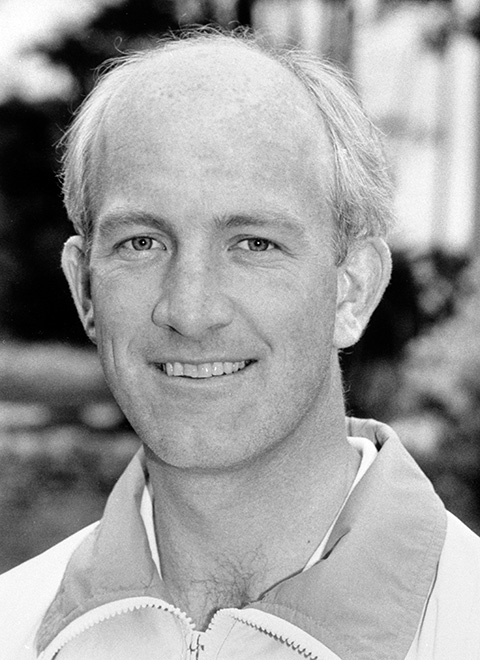
Born in Glasgow in 1956, Michael McIntyre got his first taste of victory when he became Scottish schools swimming champion at the age of 12.
Moving out of the water and onto the deck, McIntyre began competing in the Finn class. He won the British Championships in 1980, 1981, and 1984, the same year he entered his first Olympics. During this outing in Los Angeles, McIntyre finished in seventh place in the Finn class but he certainly learnt a few things that would help him out at the following Games.
McIntyre partnered with Philip Vaile in the Star class at the Seoul Summer Olympics of 1988. The competition was heated and all came down to the final race, with McIntyre and Vaile not only needing to win it but they also needed their American competitors, Mark Reynolds and Hal Haenel, to come sixth or lower. McIntyre and Vaile did their bit and won the race, while the unfortunate Americans had to retire with a broken mast.
Back home in Salisbury, McIntyre proudly hung his gold medal on the wall just outside the bedroom of his daughter Eilidh. Seeing it shining there, the younger McIntyre was inspired to see if she too could get to the Olympics and bring home her very own gold medal. Eilidh won gold at the Tokyo Games in 2020 to become first ever father-daughter gold medal winners for Team GB.
 Los Angeles 1984Los Angeles 1984Seoul 1988Seoul 1988Barcelona 1992Seoul 1988Seoul 1988Barcelona 1992Atlanta 1996Seoul 1988Barcelona 1992Seoul 1988Barcelona 1992Seoul 1988Seoul 1988Seoul 1988Barcelona 1992Seoul 1988Seoul 1988Barcelona 1992Barcelona 1992Barcelona 1992Barcelona 1992Barcelona 1992Atlanta 1996Barcelona 1992
 Atlanta 1996
 Sydney 2000
 Athens 2004
A gleaming gold after 80 years
Shirley Robertson began sailing when she was Seven, setting off from the forested shores of Loch Ard in a dinghy built by her father in their garage.
Robertson competed in the Europe class of dinghies, finishing ninth at her first Olympic Games in 1992. She kept working at her craft and made her way up the rankings to put herself in medal contention at Atlanta 1996. She used everything she'd learnt last time out to sail up against tough competition but missed out on bronze by just two points.
But there's always the next Olympics. In the build-up to the Sydney Games, Robertson took silver in the 1998 World Championships in the Europe class. Having come so close to a taste of gold, the sparkling waters of Sydney Harbour beckoned in 2000.
Robertson went to the top of the standings after race 2 of the 11 and no one was able to knock her from her perch at the top. She continued to race hard across the remaining races, competing with heart and not resting on her laurels. As she crossed the line to secure gold, a jubilant Robertson became the first British woman to win a sailing gold in more than 80 years.
Having worked so hard to get her name in the record books, Robertson was doubly rewarded as she won the prestigious ISAF "Sailor of the Year" title for 2000.
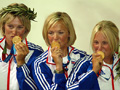
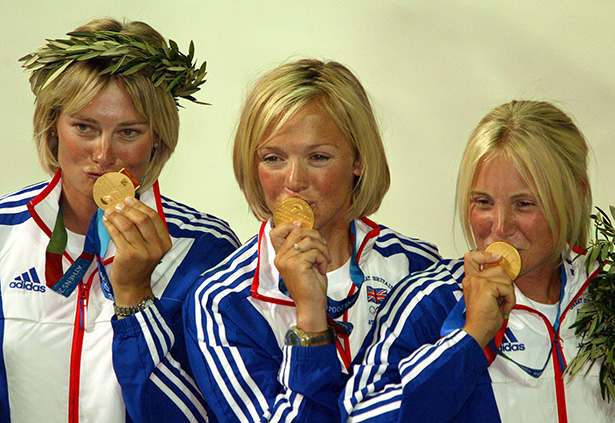
After such success, Robertson wanted a new challenge. For the 2004 Olympics, she switched classes, teaming up with Sarah Ayton and Sarah Webb in the Yngling class to form a crew that was given the affectionate nickname "Three Blondes in a Boat." A golden combination, they sealed their gold medal victory without even needing to race in the final day of the competition.
Robertson is still very active in the sailing community. She's commentated for the BBC for multiple Olympics and was the presenter of CNN's dedicated sailing programme Mainsail for many years. In 2024, Robertson became the Manager of the SuperYacht Racing Association.
 Barcelona 1992 Atlanta 1996Barcelona 1992Barcelona 1992Atlanta 1996Barcelona 1992Atlanta 1996Atlanta 1996Sydney 2000Athens 2004
 Beijing 2008London 2012
The most decorated sailor in Olympic history
When a young Sir Ben Ainslie claimed silver at the age of 19 at Atlanta 1996, he became Britain's youngest ever sailing medallist. This was quite the achievement for the young sailor who first learnt to sail off the coast of Falmouth.
But this was just the beginning of his Olympic story.
Ainslie channelled his disappointment of 1996 and took the top prize at Sydney 2000 having also won the Laser World Championships in 1998 and 1999. His duel for gold with Brazil's Robert Scheidt on Sydney Harbour remains one of the most iconic Olympic battles.
Ahead of the 2004 Games, Ainslie set his sight on a new goal - he put on around 18kg in order to move up to the Finn class. This was a shrewd move and the hardworking Ainslie won gold not only at the 2004 event, but also at Beijing 2008.
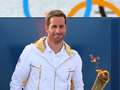
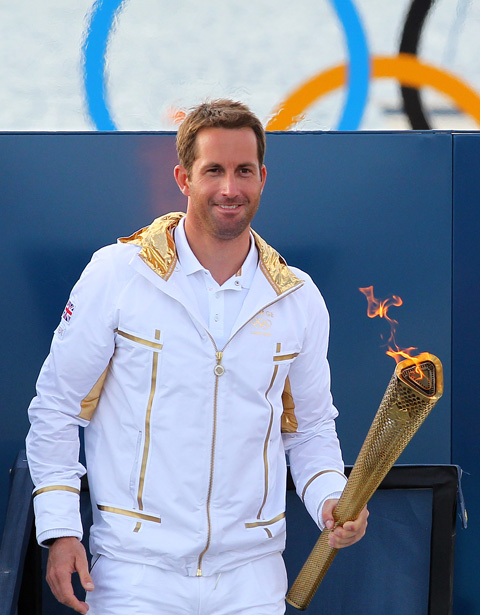
London 2012 came next. Ainslie had the great honour of being the first person to carry the Olympic torch in the UK, kicking off an awe-inspiring summer of sport. He picked up the torch in Land's End, mere miles away from where he first learnt to sail.
The Finn regatta was tense but the cheers of the home crowd in Weymouth gave Ainslie what he needed to push through and claim one more gold. This fifth medal, his fourth gold, put Ainslie's name in the Olympic record books. He became, and still is, the most successful Olympic sailor from any nation.
Following his years of Olympic success, Ainslie turned his skilled hands to the America's Cup as a sailor and tactician, winning the Louis Vuitton Cup in 2024.
He was knighted in 2013 for his services to sailing.
 Atlanta 1996Sydney 2000Atlanta 1996Atlanta 1996Atlanta 1996Sydney 2000Atlanta 1996Atlanta 1996Atlanta 1996Atlanta 1996Atlanta 1996Sydney 2000Atlanta 1996Sydney 2000Atlanta 1996Atlanta 1996Atlanta 1996Sydney 2000Sydney 2000Sydney 2000Athens 2004Beijing 2008London 2012
 Rio de Janeiro 2016
A windsurfing first for Team GB
A windsurfer originally from Norwich, Nick Dempsey competed in five Olympic Games during his career.
Dempsey learnt to windsurf with his dad and brothers on the gusty waves of Ferry Meadows, a small lake near Peterborough. Supported by dedicated parents and the RYA youth programme, Dempsey competed around the country before moving up to international competitions. His first taste of success at the world level came in the 1998 Mistral Youth World Championships where he secured the bronze medal.
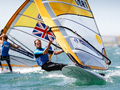
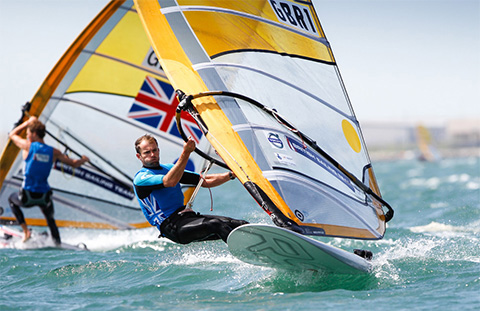
His first Olympics was more of a struggle, however, and Dempsey finished sixteenth at Sydney 2000. But he didn't let this defeat him, he let it motivate him. He trained hard and won competitions like Eurolymp Week before heading out to Athens 2004. In sweltering Greek conditions, Dempsey battled the waves across 11 races in the Mistral class. Commanding the conditions, he won bronze and became the first Brit to win a windsurfing medal since the sport was added to the men's roster in 1984.
Four years later at Beijing 2008, now competing in the RS:X class, Dempsey finished fourth. Although he left without a medal, he looked within himself and felt he could do more. He was still inspired to push for Olympic glory. Dempsey hit the waves at both London 2012 and Rio 2016, harnessing the winds off two very different coasts to surf to silver.
With these three Olympic medals in his collection, Dempsey is currently the most decorated men's Olympic windsurfer.
 Sydney 2000Athens 2004Beijing 2008Sydney 2000Athens 2004Sydney 2000Sydney 2000Sydney 2000Athens 2004Beijing 2008London 2012Sydney 2000Athens 2004Beijing 2008Sydney 2000Sydney 2000Sydney 2000Sydney 2000Sydney 2000Athens 2004Beijing 2008Athens 2004Athens 2004Beijing 2008Athens 2004Athens 2004Athens 2004Beijing 2008London 2012Athens 2004Athens 2004Beijing 2008Athens 2004Athens 2004Athens 2004Beijing 2008Athens 2004Beijing 2008London 2012Rio de Janeiro 2016Athens 2004Beijing 2008London 2012Rio de Janeiro 2016Athens 2004Beijing 2008London 2012Rio de Janeiro 2016Athens 2004Beijing 2008Beijing 2008London 2012Rio de Janeiro 2016Beijing 2008Beijing 2008London 2012Beijing 2008London 2012Beijing 2008London 2012Rio de Janeiro 2016
Britain's first women's windsurfing medallist
Bryony Shaw had her first windsurfing experience on a family holiday to France in 1992. That little taste sparked a love for the sport and she returned home eager for more. She began windsurfing at Farmoor Reservoir near her home in Oxford but it wasn't until 2005 that she committed full-time to competing.
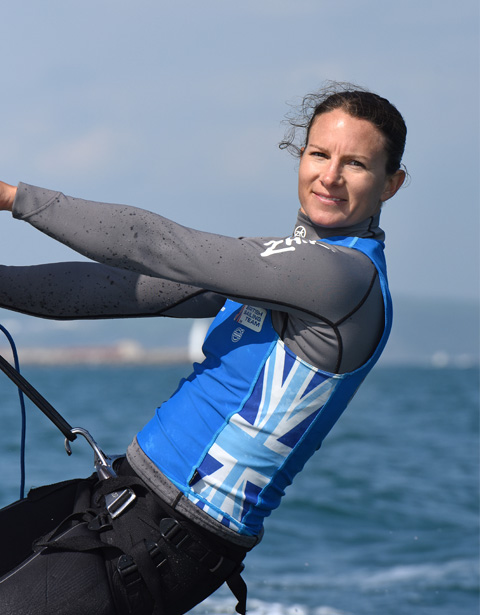
Her first Olympic opportunity came in Beijing 2008. Competing in the RS:X class, Shaw lined up against 26 other windsurfers off Qingdao. Conditions were tricky, the wind was light and unpredictable and two race days were postponed.
But Shaw didn't let the delays unsettle her. She successfully navigated the various course configurations, gaining a place in the medal race which narrowed the field down to the top 10. Her second-place finish in this final race gave Shaw the points needed to bring home the bronze and become the first woman from Team GB to gain an Olympic windsurfing medal.
Shaw qualified for London 2012 four years later, finishing in seventh place. She followed this up with a worthy silver at the World Championships in 2013 and gold at the European level in 2015.
 Beijing 2008London 2012
A passionate sailor taken too soon
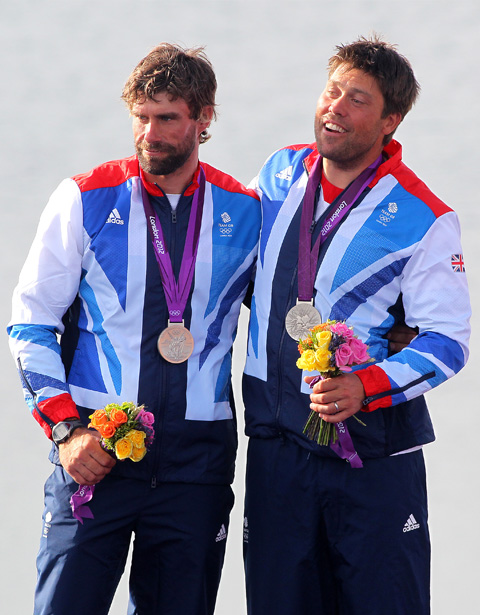
Andrew 'Bart' Simpson learned to sail in a Seafly dinghy alongside his father when visiting his grandparents in Dorset. He was part of the RYA youth squad and began his competitive sailing career in the Laser class.
His career really took off when he switched to the Finn class, although he was up against strong competition from the likes of Sir Ben Ainslie and Iain Percy. Coming up against such capable competitors only motivated Simpson more. He fought hard to take silver at the European Championships in 2001 and bronze at the World Championships in 2003.
His next target was the Olympics. In anticipation of success, Simpson made the move to the Star class and teamed up with Iain Percy for Beijing 2008.
Their race to gold in Qingdao was a dramatic one, but they got the job done. The victorious pair reunited four years later at London 2012, this time capturing a silver for the home team.
Tragically, Andrew died during training for the America's Cup in May 2013 when his yacht capsized in San Francisco Bay. The Andrew Simpson Foundation was set up in his memory, remembering his love of sailing and being out on the water. The Foundation runs sailing centres that work hard to provide sailing opportunities for all, no matter their background or ability.
 Beijing 2008Beijing 2008London 2012Rio de Janeiro 2016
GB's first Paralympic Sailing gold
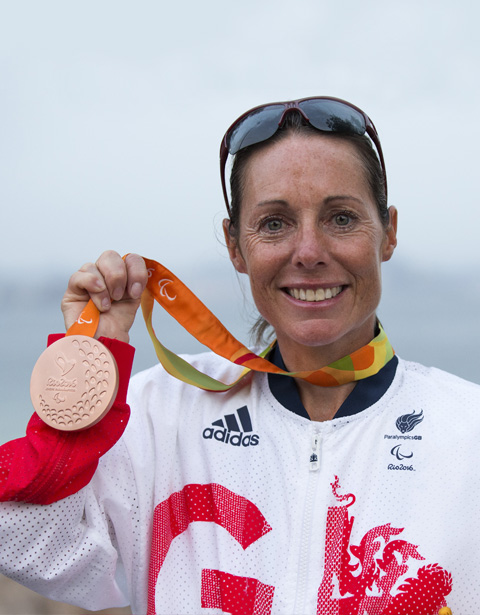
Born without thumbs and limited extension in her arms, Helena Lucas successfully competed in able-bodied classes early on in her sporting career. She didn't consider herself disabled and loved getting out on the water with fellow Olympic hopefuls.
Competing in the 470 class, she attempted to qualify for the 2000 and 2004 Games but just missed out each time. Undeterred, she stepped in for new mum Shirley Robertson in an Olympic test event in 2006. Together with Annie Lush and Lucy MacGregor, Lucas scored a silver medal in the Yngling class.
Lucas made the switch to the 2.4mR class ahead of the 2008 Paralympics in Beijing. She was nervous about the change to para sailing at first, not sure she'd get the same buzz from the competition, but these doubts were unfounded. Years later, she said herself that it was 'the best decision I ever made'.
Lucas thrived in the 2.4mR class. In her first Paralympic outing in 2008, she finished seventh but knew she had more to give. She charted a course for London 2012. The London 2012 selection process wasn't without its challenges. Lucas was run close by teammate Megan Pascoe and was the last member of Team GB's para-sailing team to be confirmed.
The home crowd support was just what Lucas needed to rise high above her 2008 achievements. With one race to go, she had sailed herself into a nine-point lead and was guaranteed at least a silver medal. However, the final race didn't go ahead - there wasn't enough wind. Thanks to the lead she'd already built, Lucas was awarded the gold medal in the 2.4mR 1-person keelboat.
Having reached such highs in 2012, Lucas became the first sailor named for Great Britain at Rio 2016. Out on the waters of Brazil, Lucas added to her medal collection as she sailed smoothly to bronze becoming Britain's most successful ever Paralympic sailor.
In 2013, Lucas was honoured with an MBE for services to sailing. She is now a coach and motivational speaker, sharing her story to inspire others.
 Beijing 2008London 2012Rio de Janeiro 2016Beijing 2008London 2012Rio de Janeiro 2016London 2012Tokyo 2020London 2012London 2012London 2012London 2012Rio de Janeiro 2016Tokyo 2020
Our most successful female sailor
Cardiff born and bred, Hannah Mills first tried sailing on a family holiday to Cornwall. Having found a new passion, she began sailing at Cardiff Sailing Centre and joined the Welsh National Optimist Squad that sailed to victory in the 2001 British Optimist Championships.
Mills continued to compete through junior competitions, taking multiple golds at a European and World level in her favoured class, the 470.
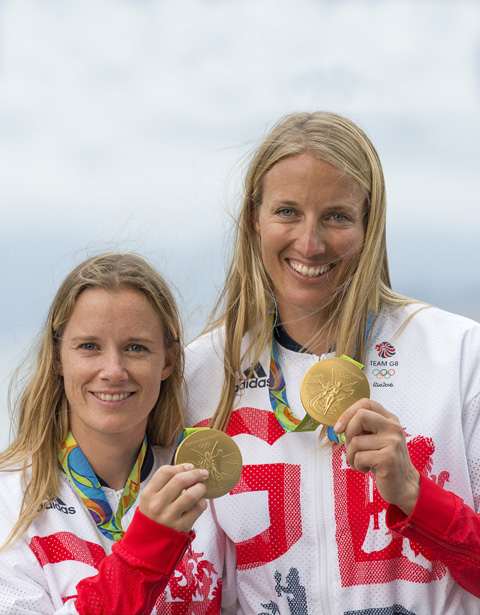
Mills began helming for Saskia Clark in February 2011. The pair clicked right away, taking silver at the 2011 World Championships, a year before their Olympic debut at London 2012.
At their home Games, Mills and Clark secured silver, just losing out to New Zealanders Jo Aleh and Olivia Powrie in the final medal race. Determined to get the gold, the British pair set their sights on Rio 2016.
This time, they clinched it and a jubilant gold was theirs in Brazil. Clark retired on this golden high, leaving Mills in search of a new partner.
Luckily, Mills found Eilidh McIntyre and this tenacious new duo took gold at Tokyo 2020, not letting the impact of the pandemic get in their way. By adding a third Olympic medal to her tally, Mills gained one more title as she became the most successful female sailor in Olympic history. An accolade that has since been passed to Marit Bouwmeester from Netherlands.
Hannah went on to win the World Sailor of the Year Award alongside McIntyre in 2021 and was awarded an OBE in the 2022 New Year Honours.
This inspiring sailor retired from Olympic competition in 2021 but still had more to give to the world of sailing. In 2022, she launched the Athena Pathway, alongside Sir Ben Ainslie, to help fast-track and develop talented young female and youth sailors. The Athena Pathway boat, skippered by Mills, competed in the landmark first ever Women's America's Cup in 2024.
 London 2012Rio de Janeiro 2016Tokyo 2020London 2012Rio de Janeiro 2016Tokyo 2020Rio de Janeiro 2016Rio de Janeiro 2016Tokyo 2020Rio de Janeiro 2016Tokyo 2020Rio de Janeiro 2016Rio de Janeiro 2016Tokyo 2020Paris 2024Rio de Janeiro 2016Rio de Janeiro 2016Tokyo 2020
Dominating to win gold after gold
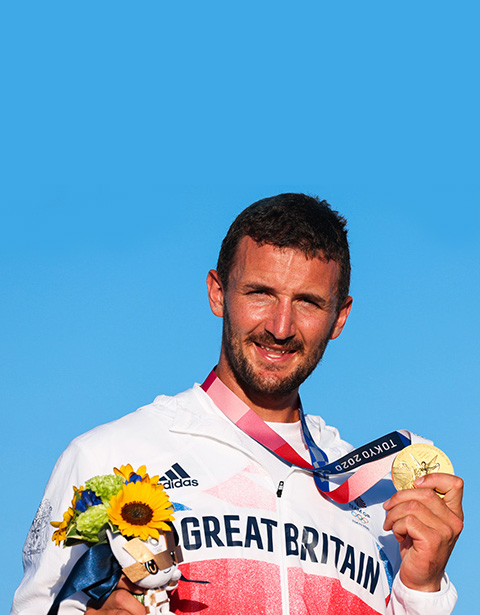
Giles Scott hoped to begin his Olympic sailing career with his home Games but he missed out on London 2012 selection thanks to stiff competition from the most successful Olympic sailor of all time, Sir Ben Ainslie.
Not one to be swayed from his course, Scott dominated the Finn class in the build-up to Rio 2016. He went unbeaten for three years from 2013, including victory at the 2014, 2015, and 2016 Finn World Championships.
His confidence was high going into Rio 2016. On the glistening waves along the Brazilian coast, he lived up to the reputation he worked so relentlessly to build, dominating the Finn class once again. He was so brilliantly efficient that he secured his first Olympic gold with a day to spare.
Scott turned his hands to the America's Cup between Rio 2016 and Tokyo 2020. He competed for Sir Ben Ainslie's team during the 35th and 36th editions while continuing to train for the Olympics.
At the delayed Tokyo Games in 2021, Scott successfully defended his Rio 2016 crown in the Finn class. He continued to set the standard for what could be done in the Finn class and added another gold medal to his tally.
Scott announced his retirement from Olympic sailing after Tokyo, but he's continued to be involved in the America's Cup and SailGP.
 Rio de Janeiro 2016Rio de Janeiro 2016Tokyo 2020Paris 2024Tokyo 2020Paris 2024Tokyo 2020Tokyo 2020Tokyo 2020Tokyo 2020Paris 2024Tokyo 2020Paris 2024Paris 2024
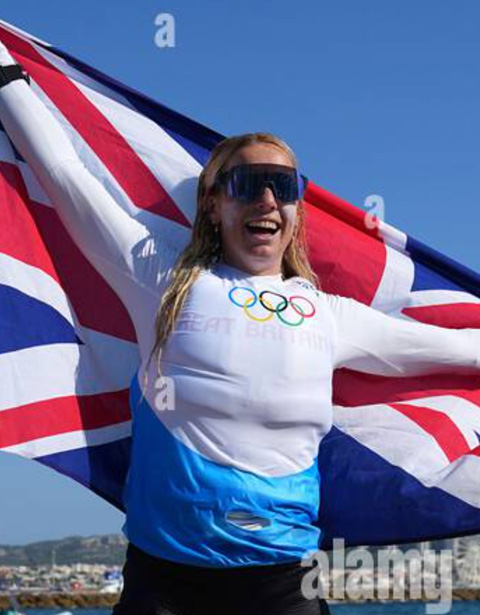
The first ever women's kitefoiling gold goes to Team GB
Thanks to a capsizing incident when she was seven, Ellie Aldridge almost never returned to the water.
Fortunately for Team GB, she did. Although she found success as a dinghy sailor in her youth, and kite foiling was just a way to have fun on the water on the weekends, she switched her speciality when kite foiling was added to the Olympic regatta for Paris 2024. She signed up to the RYA's Kite4Gold talent ID programme in 2018 and within six months was signalling her potential with a European Championship win.
In the build up to Paris 2024, Aldridge started to carve out a name for herself in Formula Kite. She won silver at the Olympic test event in July 2023 and repeated this success at the World Championships a month later. Back in home waters later in 2023, she was victorious at the Formula Kite European Championships in Portsmouth despite an early crash nearly taking her out of the running.
Buoyed by this success, Aldridge took the inaugural women's kite Olympic gold at Paris 2024 and was awarded an MBE in the New Year Honours.
 Paris 2024Paris 2024Paris 2024Paris 2024Paris 2024Paris 2024Paris 2024Paris 2024